The Life and Suffering of the Holy Apostle Bartholomew
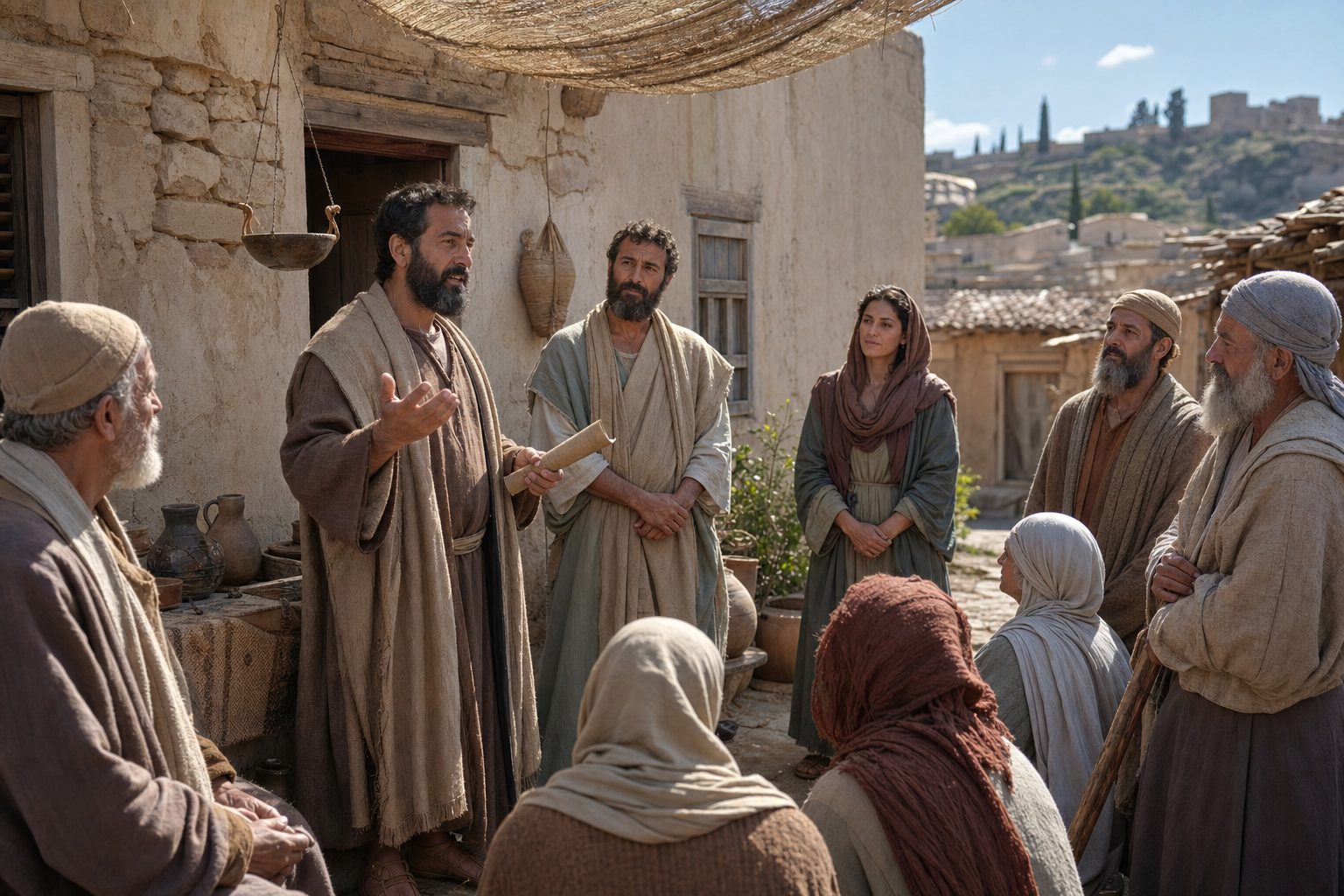
The memory of June 11
Saint Bartholomew was one of the twelve apostles of Christ. When the Holy Spirit descended on the apostles in the form of flaming tongues (Acts 1:13; 2:1-4), Saint Bartholomew was chosen by lot, along with the apostle Philip, to go preaching the Gospel in Syria and Asia Minor.
While preaching the gospel in Asia Minor, St. Philip separated himself for a time from St. Bartholomew and turned to Christ the wild and disobedient inhabitants of Lydia and Mysia. At this time St. Bartholomew, who was preaching Christ in the neighboring cities, was commanded by the Lord to come to the aid of St. Philip.
St. Bartholomew joined him in the apostolic labors and exploits, and Philip was followed by his sister, the virgin Mary, and together they began to work for the salvation of the human race.
They traveled throughout Syria and Mysia, preaching the word of God. They were severely persecuted, flogged, and stoned by the unbelievers, but by the grace of God they were able to endure.
When they came to the city of Hierapolis, where at one time a bishop was present at the first ecumenical council in 325, they preached the good news of Christ.
This city was full of idols, which all its inhabitants worshipped; among other false deities there was one huge echidna [Echidina - a poisonous snake, larger than a seedling, its injury is very dangerous and in most cases ends in a quick death.] , for which a special temple was built; there it was brought food and made numerous and varied sacrifices; madmen also worshiped other snakes and echidnas.
And when they had come to the city of Jerusalem, they came to the city of Jerusalem, and to the city of Jerusalem, and to the city of Jerusalem, and to the city of Jerusalem, and to the city of Jerusalem, and to the city of Jerusalem, and to the city of Jerusalem.
But Philip and Bartholomew and Mary stayed in Hierapolis, working hard to destroy the darkness of idolatry and to make the light of the truth shine on those who had gone astray.
The news spread throughout the whole city that he had received his sight, and many people came to him.
They also brought many sick people into the church, and through prayer they cured them. A large number of people believed and were baptized. Nicanor, the wife of Capernaum's ruler, was bitten by a viper and lay dying.
When she heard that the holy apostles were in Stachys' house and that they could cure all kinds of diseases with a single word, she, while her husband was away, sent her servants to her and was healed twice: physically from a snake bite and spiritually from a demon's delusion, for she had been taught by the holy apostles and had believed in Christ.
When the city manager returned home, Nicanor's servants told him that his wife had been taught to believe in the Lord by some foreigners who were staying at Stachius' house. Nicanor was furious and immediately ordered that the apostles be seized and Stachius' house burned to the ground.
Then the ruler of the city sat down in the judgment seat to judge those who preached Christ, and all the priests of the idols and the priests of the dead woman gathered around him and brought complaints against the holy apostles, saying: "Ruler, you are not a man of God.
For the profanation of our gods, because the great altars of our gods have been desolate, and the burnt-offerings forgotten, and our famous goddess Echidna is fallen, and the whole city is filled with iniquity.
And when they had come near to Mary, to take off her garments, and to uncover her virgin body, she suddenly became a flame of fire before their eyes, and the wicked fled from her in fear.
And they crucified him, and stoned him, and crucified Bartholomew before the temple. And suddenly there was a great earthquake, and the earth quaked, and swallowed up the governor, and all the priests, and the multitude of the unbelievers.
And the rest of them were afraid, and prayed with weeping unto the holy apostles, that they should not be swallowed up with them in the earth.
But Philip could not quickly be taken down from the cross, because he was hanged high, and especially because it was the special will of God that his apostle, through this suffering and death on the cross, should ascend from the earth to heaven, where all his life was turned to his feet.
And the Lord hearkened to his prayer, and commanded the earth to devour the living sacrifices thereof, save the chief of the city and the priests of the temple. And they all confessed with a loud voice, and glorified the power of Christ, and were baptized.
St. Bartholomew baptized all who believed in the Lord and appointed them bishop Stachius. The new converts buried the body of St. Philip with honor.
At the place where the blood of the holy Apostle was shed, a vine grew in three days, as a sign that St. Philip, for the shedding of his blood in the name of Christ, enjoys eternal bliss with his Lord in His Kingdom.
St. Mary went to Lycaonia [Likaonia, a region in the middle of Asia Minor, on the border of Phrygia] and there, among the successful evangelization of the word of God, peacefully submitted to the Lord [St. Mary's memory is celebrated on February 17]. And St. Apostle Bartholomew went to the Indian countries, where he stayed for quite a long time, working in the gospel of Jesus Christ, passing through cities and villages and healing the sick in His name.
After he had given his preaching to many of the Gentiles and had established a church, he translated the Gospel of Matthew into their language, which he carried with him and handed over to them. He also left with them the Gospel written in Hebrew, which after a hundred years was brought to Alexandria by Pantheon, a Christian philosopher [Pantheon (lived in the third century) one of the famous teachers of the Alexandrian school, in which many of the Church Fathers received Christian education.]
From India, Saint Bartholomew went to Great Armenia [Great Armenia - a mountainous country between the Kura River and the upper reaches of the Tigris and Euphrates rivers, it was called Great Armenia in contrast to Little Armenia - the region between the upper reaches of the Euphrates and Galas rivers, which was part of the kingdom of Mithridates of Pontus, and from 70 to R, X. - part of the Roman Empire.] .
The demons, or demons, that dwelt in the idols were silent when Paul appeared, and they cried out with a loud voice, saying, "Bartolomeus is tormenting us, and he is about to cast them out".
When the king heard of this, he ordered to find Bartholomew immediately; and when the apostle of Christ came to the demon-possessed woman, the demon immediately fled from her, and the princess was healed.
(Matthew 5:3) He kept nothing of what was sent, sending it all back to the king, saying: "I am not acquiring these things, but I am seeking the souls of men, and if I acquire them and bring them into the dwelling places of heaven, I shall be a great merchant before Jehovah".
When the king heard this, he and all his household believed. He was baptized along with the queen and her daughter, who had been healed. Many of the officials and a large number of the people of the country also believed. At that time, more than ten towns and villages followed the king's example and were baptized.
And when they saw that their gods were destroyed, and that their food-houses were desolate, they went to the king's brother Astyagus, and instructed him to destroy Bartholomew, and to avenge the wrongs of their gods.
And when he had found an opportunity, he took the holy apostle, and crucified him upon the cross in the city of Alban, [Alban (or Albanopolis, also Abarnopolis) - a city on the western shore of the Caspian Sea - present-day Baku.] the holy apostle joyfully suffered for Christ, and hanging on the cross, did not cease to preach the word of God; he strengthened the believers in the faith, and admonished the unbelievers to know the truth, and to turn from the darkness of the devil to the light of Christ.
And when he had heard this, he commanded that his skin should be torn off, and the holy man endured it with great patience, and continued teaching all men, and praising God.
The Apostle of Christ Bartholomew, after many illnesses and labors, passed away in peace, in the joy of his Lord [St. Apostle Bartholomew died in 71 A.D.] The former believers at the death of the holy apostle, taking his body, head and skin from the cross, placed them in a tin canister and buried them in the same city, Albania, which is in Great Armenia.
And after a long time, the persecutors, who had taken possession of the land and had become obsessed with idols, heard of the miracles that were done by the power of the apostles, and they themselves did not want to know the power of God, they took the holy relics in a tin vessel and threw them into the sea.
But the tin boat, sailing like a light ship, came to the island of Lipara. The bishop there, Agaphon, having learned in a dream that the holy relics had come to their island, came out with the clergy and all the people to the sea shore.
When the bishop and all who were present saw the relics of the holy apostle, they marveled greatly at how the tin vessel did not sink in the water, but how the boat sailed so easily the long sea journey. And all glorified God, who did so marvelous and wonderful things.
When the Persians took the city in 574, some of the Christians from the city took the remains of the apostle and withdrew with them to the shores of the Black Sea, where they were caught by the enemies, who threw the relics into the sea; but they did not drown, but miraculously sailed to the island of Lipara.
Later, the island was taken by the Arabs, who scattered the relics of Apostle Bartholomew, but they were miraculously gathered together; St. Bartholomew appeared to one monk and indicated the place where to find them. After this, the relics of St. Apostle were moved to the Neapolitan city of Benevent (in the IX century), from where they were moved (at least part of the relics) in the X century to Rome.
It is not proper to be silent about the following, found in the life of St. Joseph the Songwriter, the story of the holy apostle Bartholomew. While in Thessaly, St. Joseph received from a virtuous husband a part of the relics of St. Paul.
After bringing it to his monastery near Constantinople and building a special church there in the name of the holy Apostle Bartholomew, Joseph honorably placed a portion of his relics there.
Feeding great love and faith in the holy apostle, he often liked to see him in dreams and wanted to decorate the feast of the holy apostle with praise songs; however, he did not dare to do so, doubting whether this would please the holy apostle, and earnestly prayed to God and the apostle of God to reveal this to him and to give him wisdom from above to create, worthy of St. Bartholomew, praise verses.
St. Joseph prayed for forty days with fasting and tears, and when the day of the apostle's memory drew near, on the eve of the feast, he saw that St. Bartholomew appeared at the altar, dressed in white robes, and opened the altar curtain, calling him to himself.
And when St. Joseph came nearer, the holy apostle took the holy Gospel from his throne and laid it upon Joseph's breast, saying: "May the right hand of Almighty God bless you, and may the waters of heavenly wisdom flow upon your tongue; may your heart be the temple of the Holy Spirit, and may your songs delight the universe".
So said the holy Apostle Bartholomew and became invisible, and St. Joseph, feeling in himself the grace of wisdom, was filled with indescribable joy and gratitude.
For all these things to Christ our Savior glory with the Father and the Holy Spirit forever and ever. Amen. Some think that Bartholomew is the same person as Nathanael, whom Philip led to Christ (John 1:45).
For the word "bar" is translated from the Hebrew son, as in another place Christ the Lord said to the Apostle Peter: "Blessed are you, Simon son of Jonah" (Matthew 16:17), that is, son of Jonah. And the blind man of Jericho was called Bartimaeus, that is, the son of Timaeus.
For one thing, the Gospels do not mention Bartholomew's call to the apostleship, except for Nathanael.
Then, the first three Gospels, Matthew, Mark, and Luke, which tell of Bartholomew, say nothing about Nathanael, and the Gospel writer John, who tells of Nathanael, says nothing about Bartholomew, and speaking of the fishing at the appearance of the resurrected Savior, lists Nathanael among those close to the apostles - namely, he says: "Simon Peter and Thomas and Nathanael and the sons of Zebedee were together". - John 21:2.
But other interpreters disagree and, according to the Prologue, believe that Simon the Zealot is the same person as Nathanael, and some believe that Nathanael is one of the 70 disciples of Christ.